
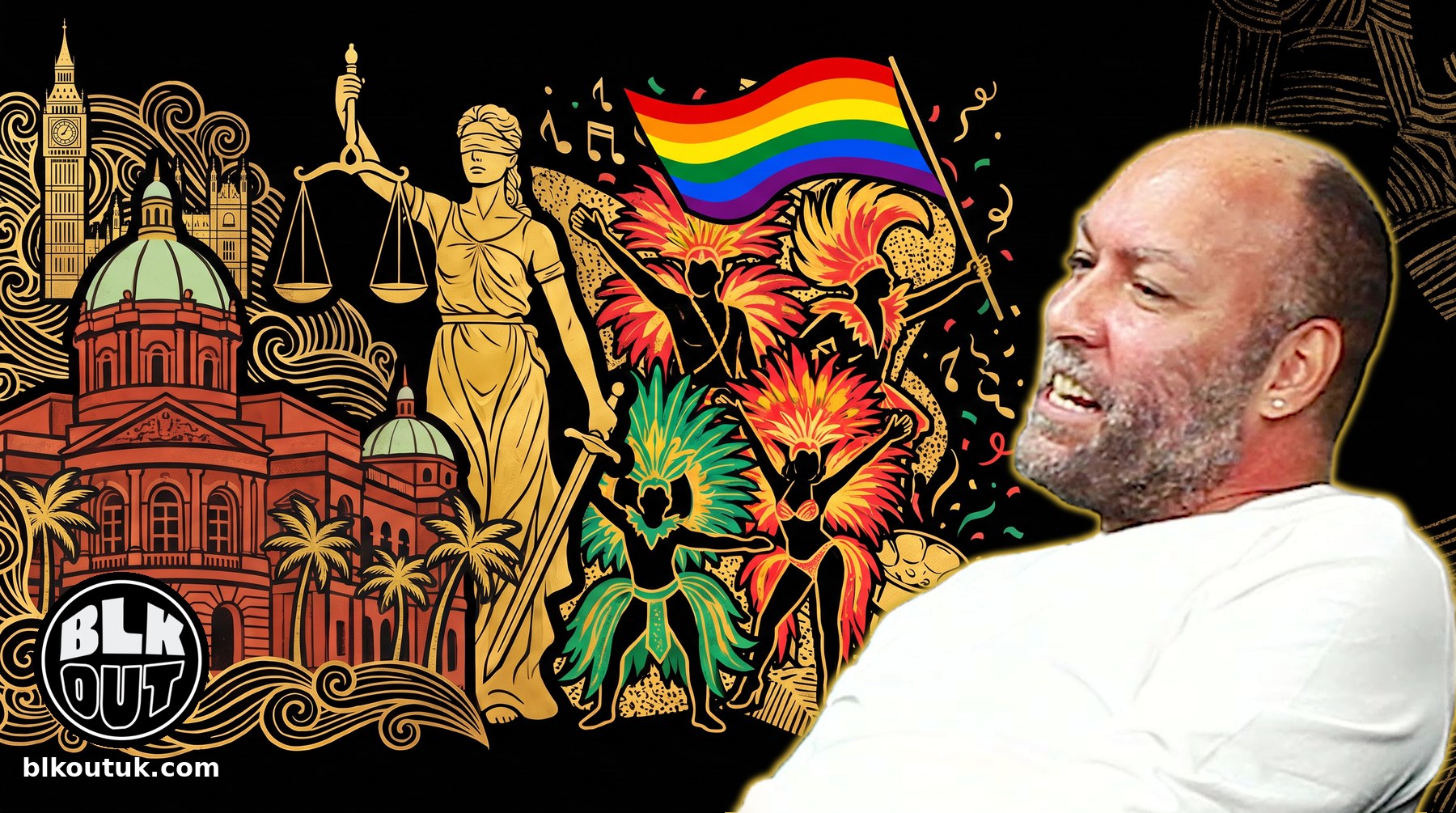
On 10 November, five justices of the Judicial Committee of the Privy Council ruled unanimously that the laws criminalising gay men in Trinidad and Tobago cannot stand – a ruling handed down in London, the city whose Parliament first wrote laws like these for its colonies.
The case was brought by Jason Jones, a human rights defender from Trinidad and Tobago, against sections 13 and 16 of the country's Sexual Offences Act 1986, which made 'buggery' and 'serious indecency' between adults of the same sex into crimes. He challenged them in 2017 and won in the High Court a year later. In 2025 the Court of Appeal decided that much of the law was protected, because it echoed statutes older than the country's Constitution. The Privy Council disagreed. The 1986 Act was new law, it found, and old prohibitions do not get to hide from constitutional scrutiny once Parliament has written them out again in its own hand.
The judgment, given by Lord Sales and Lord Burrows, says that the ability to form an intimate and loving relationship with another person "lies at the core of the right to private and family life". The interference with Jason's private life is, it concludes, too severe to be "reasonably justifiable in a society that has a proper respect for the rights and freedoms of the individual". The Board will take further written submissions before making its final order, but its provisional view is that the High Court's order should be upheld. After nearly a decade in the courts, that is about as close to the end of a legal road as anyone is likely to get.
It matters well beyond Port of Spain. Independence constitutions across the Commonwealth Caribbean came with 'savings clauses' that shield laws older than the constitution itself from challenge: colonial wiring built in at the start, and kept. The Privy Council has now said that shield does not cover a law that Parliament has written out again since independence. "This judgment will have a domino effect across every country that has the privy council as its supreme court," Jason said in a statement after the ruling. "It will change many millions of people's lives."
#
He could have stood aside
Jason has told the story of how he came to leave Trinidad. He was raised deeply Roman Catholic – his grandmother played the organ at the cathedral, he sang in the choir – and when he realised he was gay he went to the monastery to train for the priesthood. "That's what you did in the Caribbean," he said in Black Queer Histories to Black Queer Futures, the series BLKOUT made with The Mix in 2019. "If you were a lesbian or gay man in a middle-class family, you joined the nunnery or you joined the priesthood." The homophobic bullying was intense. Then, at 19, he met Nina Simone. She had come to Trinidad, Jason drove her around the island, and they sat on the beach singing Neil Diamond songs to each other. "She said to me, Jason, you've got to get off this rock." He went, alone, to a country where he knew nobody. "It was Nina Simone told me, get off, go and chase your dreams in the world." Watch the full interview in three parts: one, two, three.
It is one thing to stand aside and tut at the way the world is, and there is real comfort in that position – sometimes even joy. Jason chose otherwise, putting his name, his safety and the better part of a decade into the argument that colonial-era law has no place in a free Caribbean. He won it in the highest court there is for Trinidad and Tobago – a court that now sits across the square from the Parliament that first exported these laws.
That square has a longer memory than the court. A short walk up Whitehall stood Whitehall Palace, where Elizabeth I and her courtiers were laying the trap of racial capitalism – the conviction that might was evidence of divine right, and that slavery and colonial exploitation were somehow deserved by those who suffered them. Elizabeth backed John Hawkins's slaving voyages to West Africa in the 1560s, lending him one of her own ships. And as Peter Fryer records in Staying Power, the same queen who opened the door to the trade in people made black and subhuman was, by the end of the century, signing orders to remove the Black community growing up in London and the port towns – arriving, no doubt, by 'small boats'.
When Jason sent me his chapter for Ivor's Compass in April, he was, as he put it, "embroiled in a landmark civil suit to strike down British colonial-era laws that criminalise LGBTQ+ people". His piece, "Guncle Ivor", is about Ivor Cummings, the gay Colonial Office official who welcomed the Windrush passengers in 1948. It is also about the queer Black elders whose shoulders Jason says he stands on. Its central line has stayed with me ever since: "Resistance, while sharpened by exclusion, is learned in community."
He ends the chapter with A luta continua! – the struggle continues – and Jason knows it better than most. After thirty years, and a win against the odds, the money and the inertia, he would be quite justified in putting his feet up. But, as Quentin Crisp might have put it, 'campaigner' is rather his style, and it suits him. His persistence will inspire rights defenders across the Caribbean, the Americas and the globe to remain steadfast in what they believe, and to continue the struggle for as long as it takes. Laws like these are still on the books across the Caribbean and beyond, and the rollbacks of queer rights he warns about across African countries are gathering pace. Losing sight of that would be a mistake; so would letting this win pass without the celebration it deserves.
#
A seat at the table
On Monday 28 December, Black queer men in Croydon will gather for Joseph Beam Day, the first of BLKOUT's Rites: working with local chapters of Black queer men to build the rights and rites we need to live our best lives. The day begins at Ivor's Table, a dinner named for the man Jason wrote about. After dinner comes our King's Speech, a series of monologues by and for Black queer men setting our new year agenda. The whole day is a White Party, so wear white – for new beginnings, for those who came before, and for the wins we've earned.
We have invited Jason to take his seat at the table and to open the King's Speech with a few after-dinner remarks. If anyone doubts that our arguments can be won, his is the win to come and celebrate with us.
Back the crowdfunder, book your place: both open on Monday 16 November.
---
Sources: Judicial Committee of the Privy Council, The Attorney General of Trinidad and Tobago and others v Jason Jones [2026] UKPC 38, press summary, 10 Nov 2026 (jcpc.uk/cases/jcpc-2025-0095). Ivor's Compass, "Guncle Ivor", Jason Jones. Black Queer Histories to Black Queer Futures, Jason Jones, parts one to three (BLKOUT with The Mix, 2019). Peter Fryer, Staying Power: The History of Black People in Britain (Pluto Press, 1984).