
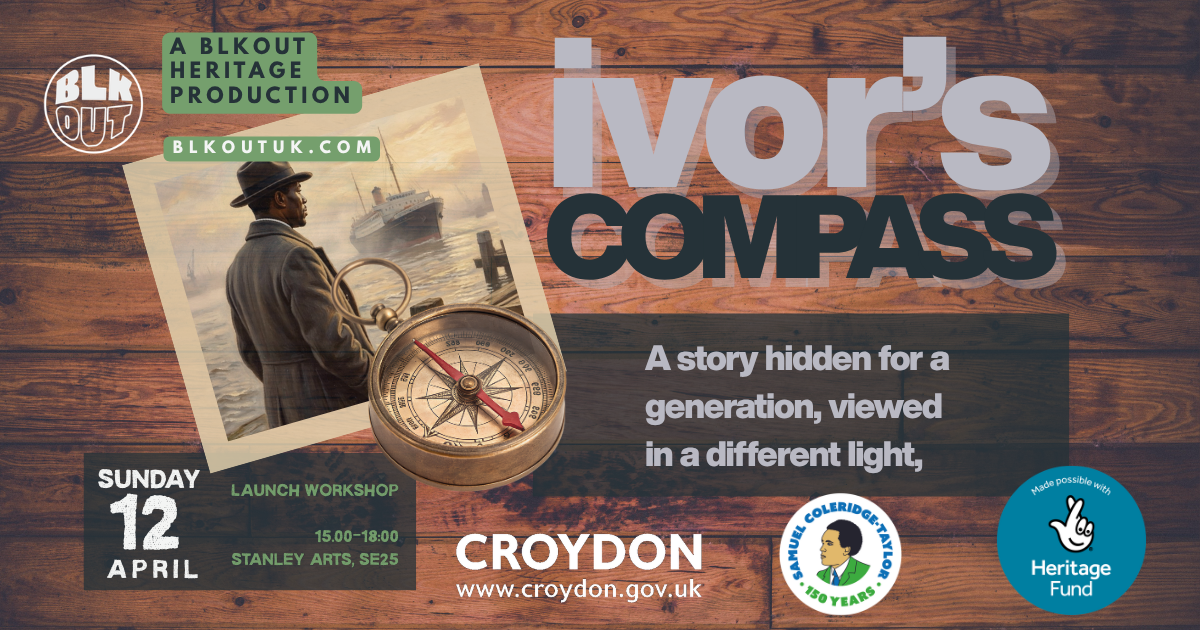
When Ivor Cummings died in 1992, he left a suitcase. Papers — correspondence, documents, perhaps reflections — intended for Paul Danquah, the younger queer Black man, actor turned statesman he’d mentored for years. Paul gave the eulogy at Ivor’s funeral. He never received the case. Nobody opened it. What was in it? We’ll never know.
Not in accusation, but in recognition. A brother dies. A sister grieves. The private papers of a gay man in 1992 carry a weight that is difficult to overstate. We can be quick to forget that government legislation passed in 1988 and on the statute books until 2003 targeted queer people, defining homosexuality as ‘a pretended family relationship’. This is how erasure works, most of the time. More whimper than bang. Not through conspiracy, but through accumulation. Not yet. Not now. Not the right moment. Until “not yet” becomes “never” and silence becomes the only record.
Ivor Cummings was the first Black official in the Colonial Office. Gay. Mixed heritage. Sierra Leonean-British. Croydon-raised, family friend and cousin of the Coleridge-Taylor clan. After Cambridge, he moved through the jazz clubs of wartime London — Florence Mills Parlour, Florida Club, and the Café de Paris, following the West Indian Dance Orchestra — and arranged Ken Johnson’s funeral when a bomb killed the bandleader mid-performance. He fought the colour bar from inside Whitehall, then stood on Tilbury Docks in June 1948 to welcome the Windrush generation. Nicholas Boston called him “the forgotten gay mentor of the Windrush generation.” The phrase stuck because it’s exact.
Here’s what matters. Not the milestones — though they’re extraordinary — but what happened afterward. The Colonial Office offered him a top job in Trinidad. A career move. The respectable reward to go with the OBE he’d received in 1948. He refused. Nkrumah wanted him to help build Ghana. The first Black nation to gain independence from colonial rule since Haiti in 1804. The Colonial Office offered a career. Africa offered a purpose. He chose Africa. Then Sierra Leone, with homes in Freetown and London. Arnold Gordon knew him as always ready with a quip and a laugh, his Gloucester Place flat always a hive of activity — people arriving from West Africa, friends dropping in, Ivor at the centre. Still connecting. Still holding space.
And then thirty years of nothing. His story disappeared. His work widely unacknowledged.
Too queer for one history. Too Black for another. A life that bridged the Colonial Office and Pan-Africanism, Croydon and Freetown, the jazz clubs and the committee rooms — reduced to a gap in the archive. It took Stephen Bourne, working through boxes at the National Archives, to bring him back. But even recovery has its limits. The archive holds memos and committee minutes. It cannot hold what Ivor thought about any of it.
So we’re telling it differently, looking back at Ivor’s life in a new light.
BLKOUT has commissioned writers — Jason Jones, Jackson King, Reuben Silungwe — to sit with chapters of Ivor’s life and write what comes up for them. Not history essays. Meditations. What does it mean to work inside a system that wasn’t built for you? What does it mean to welcome strangers to a country that barely welcomes you? What happens to a story no one tells for thirty years?
We’re building these reflections into a digital journal — a wellness companion that connects Ivor’s story to your own — free to all who contribute to the project, and to Black queer folk in Ivor’s hometown of Croydon. And inspired by Harlem Renaissance styles, we’re putting a new art installation into spaces where the people who need to hear this will actually be. Not waiting for them to come to heritage events. Going to where they are. Club nights. Community spaces. The places Black queer men already gather.
Heritage does not belong behind glass. It’s something you carry with you — or it’s nothing at all. Ivor’s suitcase was never opened. This journal is our way to help each other to understand our own narratives. Our stories have power, not least for our own lives, refusing the same silence.
Ivor’s Compass launches this Sunday 12 April at Stanley Arts, South Norwood. Join us to explore what we can learn from Ivor’s life and legacy, contribute to new forms of storytelling, and emulate Ivor’s spirit of community and connection. Free. Book here
Funded by the Samuel Coleridge-Taylor 150 Small Heritage Grant (Croydon Council / National Lottery Heritage Fund).