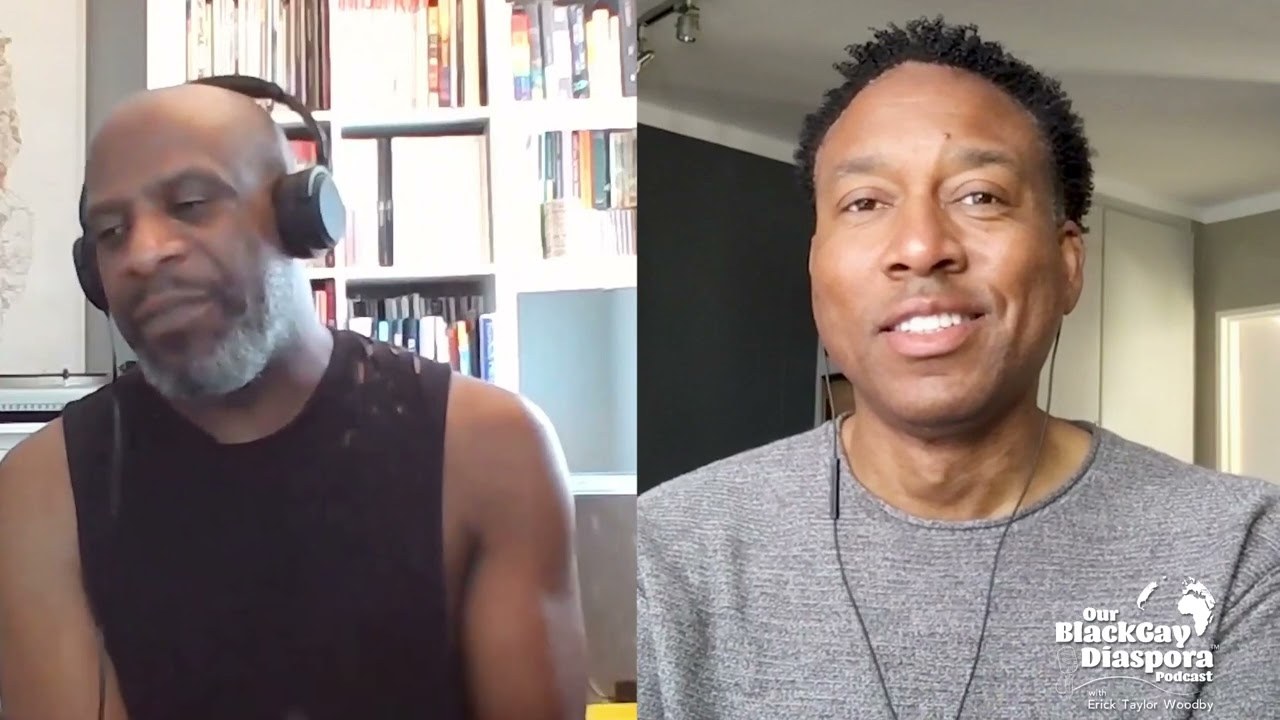
Three years ago, on a mid-week afternoon, a podcast host called Erick — on his show Our Black Gay Diaspora — asked me the question everyone eventually asks: what is BLKOUT UK? I answered with a line I'd borrowed years before from Essex Hemphill — the poet who taught a generation of us that survival could be a collective project, not a private negotiation. "I want to start an organisation to save my life," I said. Not a career. Not a gap in somebody else's sector strategy. My life.
I meant it plainly, and not as hyperbole. Twenty-five years into a career in civil society — running Britain's leading race-equality think tank, eventually collecting an MBE for services to equality — and at no point had I seen work with my peers, with Black queer men, valued by those men, or by the organisations paid to deliver it. I wanted better for myself. I wanted to spend whatever privilege I'd accumulated on people like me, rather than banking it.
That's the founding thought. Everything since is an argument about what follows from it.
Here's the argument, stripped to its bones. Civil society is very good at inviting us to receive services; it is much less interested in asking why we don't turn up for each other. So I asked a different question — the one this whole piece is named for. What do we own together? What could we point to in twenty years and call a legacy, rather than a programme somebody else designed for our improvement?
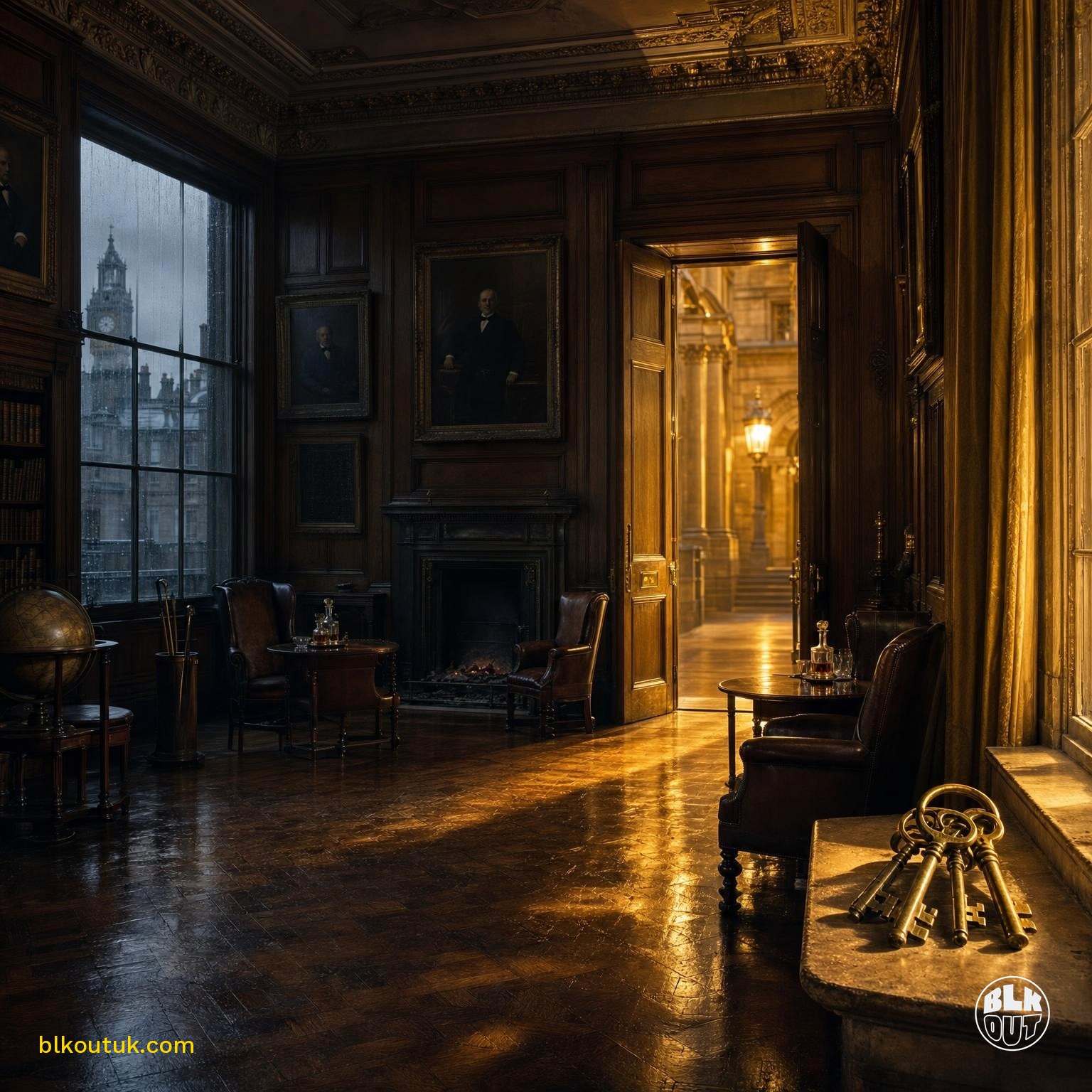
I told Erick about an idea I was chasing that year. A hundred and fifty years ago London had four hundred gentlemen's clubs, built by and for the elites who ran the country — and, not incidentally, the empire. I wanted to borrow one. Literally: from Westminster City Council, for six months, and let Black queer men set its agenda instead. Not as guests. Not for one night, or twelve hours in a park at Pride once a year. Holding space for the rest of society, for once, rather than forever being invited into someone else's.
I still don't know, three years on, whether that particular room ever opened its doors to us. What I do know is that the question underneath it — ownership, not access — is the one BLKOUT has spent the years since answering structurally rather than rhetorically. We were wound up in 2024, and rebuilt, deliberately, as a community benefit society: assets locked, owned by the members it serves, not by me and not by any funder. This November's AGM, and the membership we open this winter, are that same 2023 question given a legal shape. Ownership, it turns out, is not a metaphor. It's a rulebook.
I don't get here without people who made room before I needed it. Marc Thompson — who would later help found BLKOUT alongside me — and Dennis Carney were already doing the patient, unglamorous work of the HIV sector when I arrived on the scene, absorbing indignities I hope nobody who follows us has to. That generation had watched racism up close for a lifetime, and then watched Black Britain fight back: the uprisings of the early 1980s in St Pauls, Brixton, Southall, Toxteth, Moss Side, Handsworth, Chapeltown, Hyson Green, Tottenham. We forget, conveniently, how deep and how widespread that unrest was — and how thoroughly it politicised a generation of Black youth who are now our elders. Out of that same generation, men were self-publishing Black gay poetry and opening their homes on Friday nights for a meal. That was the whole infrastructure. It was enough to make a community.
In February 2019, we made our own small addition to that lineage. BLKOUT took over the National Portrait Gallery for LGBT History Month and inaugurated the Berto Pasuka Arts Prize and Lecture — named for a queer Jamaican dancer who, with fellow Jamaican Ritchie Riley, founded Europe's first Black-led dance company in 1946, judged by a panel that included the artist Sonia Boyce. That one should have become a tradition. Instead it became a memory.
My philosophy has always been to ask, to test, to find the answer — affirmative or negative — rather than hold back and be left wondering. It is an ambitious way to run a life, and it put a real strain on the small triumvirate that had nurtured the Prize into being. The idea was meant to do two things at once: honour a past most of Britain has never been taught, and generate excitement about a future none of us had built yet. That is a harder trick than it sounds when you don't know how deep the community's pockets run, or who among us might actually back an ambition like that with cash rather than applause. Those are the footsteps I'm walking in, and the debt I still owe.
Underneath all of it sits something harder to say cleanly — which is presumably why I've mostly said it on camera rather than in print. How much of my own life did I spend avoiding being seen? I developed a way of speaking: a cadence, unhurried, hard to interrupt but never loud, engineered so I wouldn't be dismissed as difficult, wouldn't be read as the angry man in the room. I rehearsed, on night buses, conversations I never had the courage to start. Somewhere between Zone 1 and my parents' house I would fog myself back into the closet, most weeks, for years. That avoidance made me good — genuinely good — at building spaces for people doing the same thing to themselves. It also cost something. I would like the people who come to BLKOUT after me to spend less of themselves on hiding.
Can we feel like we have a place to call home? A community that is ours, that we can rely on, even if it's only for one night a week? That is still the whole ambition. Not a feed. Not a parade route we're permitted to walk once a year. Something we own, that outlasts the mood of whoever happened to build it.
Three years after that conversation, the invitation is the one I made to Erick, and it's the one I'm making to you: come and find out what you can do with people who already have your back.
That original conversation runs forty minutes, and there's more in it than fits here. Listen to the full episode of Our Black Gay Diaspora.
Further listening. Ours wasn't the only UK conversation Erick has recorded. Since 2021 he has sat down with more than two dozen Black queer Britons — and he has gathered those episodes into a single list. Our Black Gay Diaspora: A UK Playlist.